

Mindful Space | Last updated October 2026
Someone can have autism and ADHD, although the combination is not always easy to recognise. The two conditions can affect similar areas of life, while other traits may interact in ways that appear contradictory or difficult to explain.
Some experiences can appear contradictory. Routine may feel reassuring but be difficult to maintain, while a stimulating environment may be enjoyable at first and overwhelming shortly after. An assessment can explore whether patterns such as these are connected with autism, ADHD or both.
Autism and ADHD Can Occur Together
An autism diagnosis does not automatically explain persistent difficulties with attention, organisation, restlessness or impulsivity. These experiences may indicate that ADHD is also present, particularly when they form a long-standing pattern that affects several areas of daily life.
Likewise, ADHD may not fully explain differences in social communication, sensory processing or the need for predictability. When both conditions are present, some people use the informal term AuDHD. It can be a helpful way to describe the combination, but it is not a separate clinical diagnosis.
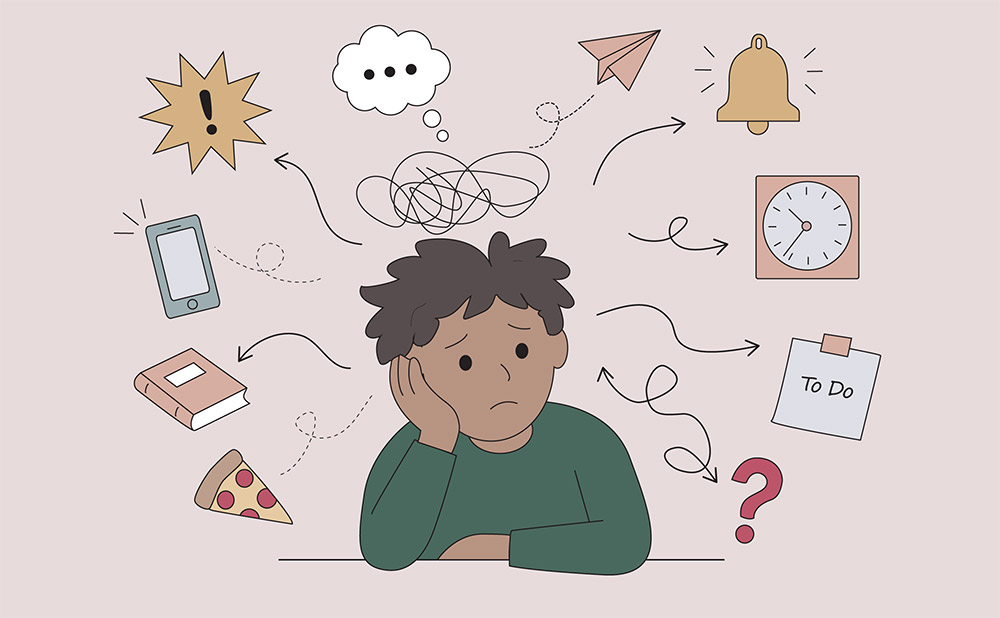
Autism and ADHD can occur together, with each condition influencing how certain traits and difficulties appear in everyday life.
Autism and ADHD Can Affect Similar Areas of Daily Life
Both conditions can influence concentration, organisation, communication, emotional regulation and responses to the surrounding environment. Difficulties in these areas may be noticeable at home, in education, at work or within relationships, but they will not look the same for everyone.
The behaviour visible to others does not always reveal what is causing it. Losing track of a conversation, for example, could relate to shifting attention, difficulty interpreting the interaction, sensory overload or several of these experiences occurring at the same time.
Autism and ADHD May Create Conflicting Everyday Needs
Autistic and ADHD traits do not simply sit alongside each other. They can interact in ways that make everyday needs feel inconsistent, particularly when meeting one need makes another difficulty more noticeable.
Someone with autism and ADHD may:
- Depend on routine but struggle to organise or maintain it
- Seek novelty while finding unexpected changes difficult
- Need stimulation but become overwhelmed by noise or activity
- Concentrate intensely but find switching between tasks disruptive
- Generate ideas quickly but struggle to plan or complete them
- Want social contact but need considerable recovery time afterwards
- Act impulsively and then need additional time to process what happened
Autism Can Mask ADHD, and ADHD Can Mask Autism
When ADHD has already been diagnosed, differences involving sensory processing, social communication or unexpected change may be overlooked. If autism was identified first, persistent difficulties with attention, impulsivity or organisation may be assumed to form part of that diagnosis.
Masking can make the picture even less clear. Someone may carefully observe others, rehearse social interactions, use extensive organisational systems, or devote considerable effort to appearing calm and capable. These strategies can conceal difficulties without reducing their effect on energy, confidence or wellbeing.

A combined assessment can establish whether someone is autistic, has ADHD or experiences both conditions together.
Autism and ADHD May Become More Noticeable at Different Ages
In childhood, the combination may affect classroom attention, friendships, sensory comfort, transitions and routines at home. More visible behaviour may attract attention first, while quieter difficulties may be mistaken for anxiety, shyness, defiance, or a lack of effort.
In adulthood, greater responsibility for work, household tasks, finances, and relationships can expose difficulties previously supported by family or school structures. Some adults consider a further assessment when an existing diagnosis explains part of their experience but leaves other long-standing patterns unresolved.
Support for Autism and ADHD Should Address Both Conditions
Strategies designed around one condition may not always accommodate the other. A detailed routine may provide helpful predictability, for example, while ADHD-related difficulties with planning and consistency make that same routine difficult to follow.
Recognising both conditions allows support to account for these competing needs. This may include ADHD treatment, psychological support, practical strategies for organisation, sensory adjustments or changes at school or work. The aim is to make daily life more manageable without expecting someone to follow an approach that does not suit how they function.
An Autism and ADHD Assessment Explores the Complete Picture
An autism and ADHD assessment explores early development, current experiences and the effect of relevant traits across different settings. Clinical interviews and questionnaires may be supported by childhood records or information from a parent, partner or another person who knows the person well.
Bringing this information together helps establish whether autism, ADHD or both provide the clearest explanation for the difficulties being experienced. The assessment can also identify other concerns that may require attention and guide recommendations for treatment, adjustments or ongoing support.
Recognising Both Autism and ADHD Can Provide Clearer Answers
Identifying autism and ADHD together can explain experiences that previously seemed inconsistent or difficult to understand. It may also help someone recognise why certain environments, expectations or coping strategies have remained challenging despite considerable effort.
At Mindful Space, we explore the full pattern of autistic and ADHD traits without assuming that every difficulty belongs to one condition. This allows us to determine whether autism, ADHD or both are present and recommend support shaped around the findings.
Book an Online Autism and ADHD Assessment with Mindful Space
If autistic and ADHD traits may be affecting your or your child’s daily life, Mindful Space provides clinician-led online ADHD and Autism assessments for adults and children throughout Ireland. A comprehensive assessment can establish whether autism, ADHD or both may be present and provide clear recommendations for the most appropriate next steps.
FAQs About Autism and ADHD
Can you have both autism and ADHD?
Yes, autism and ADHD can occur together, and someone may receive both diagnoses when their experiences show a clear pattern of each condition. Recognising both can help explain difficulties that one diagnosis alone has not fully accounted for.
What does AuDHD mean?
AuDHD is an informal term used by some people who are autistic and also have ADHD. It is not a separate clinical diagnosis, but it can provide a useful way to describe how the two conditions are experienced together.
What can autism and ADHD look like together?
Someone may need predictability but find routines difficult to maintain, seek stimulation but experience sensory overload, or focus intensely while struggling to begin everyday tasks. The particular combination of traits and difficulties will differ from person to person.
How do autism and ADHD overlap?
Both conditions may affect executive functioning, communication, emotional regulation and the ability to manage everyday demands. Similar outward behaviour can have different underlying reasons, so an assessment considers the wider pattern rather than one trait in isolation.
Can autism and ADHD mask each other?
Yes, traits associated with one condition can make the other more difficult to recognise. Coping strategies and masking may also conceal difficulties from family members, teachers, employers and healthcare professionals.
Why might someone receive one diagnosis before the other?
One group of traits may be more noticeable or have a greater effect at a particular stage of life. Other difficulties may initially be attributed to the first diagnosis, anxiety, personality or the pressures someone is experiencing at the time.
Can children and adults be diagnosed with autism and ADHD?
Yes, both children and adults can be assessed for autism and ADHD. The conditions begin during development, but they may remain unrecognised until responsibilities or environmental demands make the difficulties more apparent.
Does a dual diagnosis change the support someone needs?
It can, because support designed around one condition may not address difficulties associated with the other. Recommendations can then account for attention, organisation, sensory needs, communication and the need for an appropriate balance of structure and flexibility.
How are autism and ADHD assessed together?
Assessment explores developmental history, current experiences and how relevant traits affect different areas of life. This information helps determine whether autism, ADHD, or both provide the clearest explanation, and what support may be appropriate.
Can an autism and ADHD assessment take place online?
Yes, Mindful Space provides online autism and ADHD assessments for adults and children across Ireland. The appropriate assessment pathway will reflect the person’s age, developmental history and the concerns that have led them to seek support.