

Mindful Space | Last updated September 2026
ADHD treatment can reduce difficulties with attention, impulsivity, restlessness and emotional regulation, but it should also make everyday life more manageable. Medication, psychological therapy, behavioural strategies and practical support each address different aspects of the condition.
So, what is the most effective treatment for ADHD? There is no single answer that applies to everyone. Medication has some of the strongest evidence for reducing core ADHD symptoms, while a broader treatment plan may be needed to support organisation, relationships, education, work and emotional wellbeing.
Different ADHD Treatments Target Different Difficulties
The most appropriate option depends on where ADHD is having the greatest effect. Someone struggling primarily with concentration may need a different balance of treatment from someone whose main difficulties involve impulsive decisions, emotional regulation or completing everyday responsibilities.
Important considerations include:
- Age and stage of development
- Which symptoms cause the greatest difficulty
- The effect on home, education, work and relationships
- Co-existing mental or physical health concerns
- Previous treatment and medication responses
- Personal preferences and available support

Effective ADHD treatment is shaped around the symptoms and everyday difficulties affecting each person.
Medication Is One of the Most Effective Treatments for Core ADHD Symptoms
Medication is among the most effective options for reducing inattention, hyperactivity and impulsivity. Research comparing ADHD medications has found that several stimulant and non-stimulant options can improve core symptoms, although effectiveness and tolerability can differ between children and adults.
The choice of medication takes into account physical health, sleep, appetite, other medications, and possible side effects alongside the expected benefits. The initial option or dose may not be the most suitable, so the response needs to be monitored and adjustments made where appropriate.
ADHD Treatment May Need to Address Symptoms and Daily Functioning
Reducing core symptoms may make it easier to concentrate or pause before acting, but it does not automatically resolve every effect ADHD has had on daily life. Additional support can help turn symptom improvement into meaningful changes in organisation, emotional regulation and responsibilities at home, school or work.
Cognitive Behavioural Therapy Can Support Adults with ADHD
Cognitive behavioural therapy can help adults recognise patterns connected with procrastination, avoidance, low confidence and emotional distress. It can also introduce structured ways to approach tasks, respond to setbacks and manage difficulties that may continue after core symptoms have improved.
Behavioural Support Can Help Children and Families
Behavioural support can help parents and caregivers introduce clear expectations, predictable routines and consistent responses. It focuses on making the child’s environment easier to manage while developing skills gradually, rather than treating ADHD-related behaviour as laziness or deliberate disobedience.
Psychoeducation Can Make ADHD Easier to Manage
Psychoeducation helps people and families understand how ADHD affects attention, motivation and self-regulation. This understanding can guide practical strategies involving reminders, task planning, sleep routines and suitable adjustments without suggesting that someone simply needs to try harder.
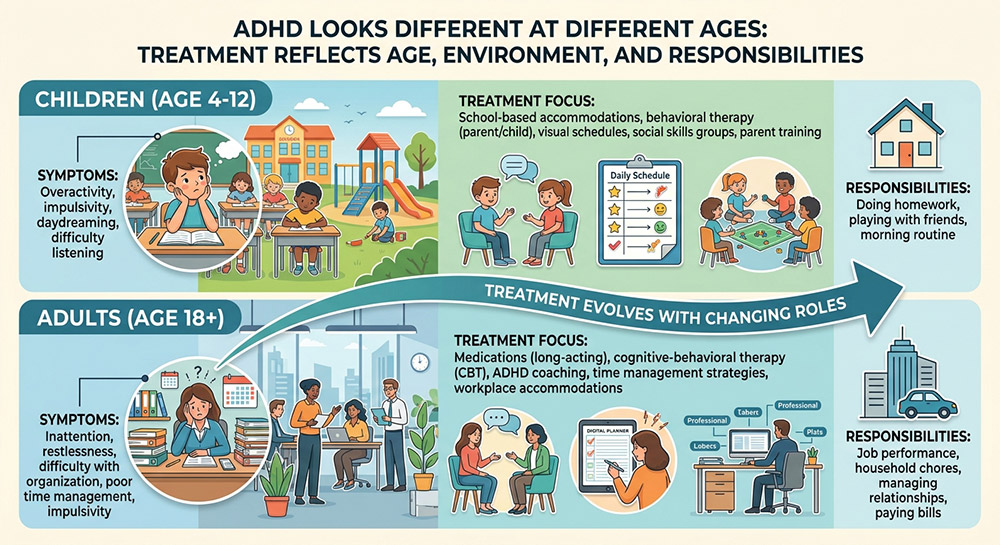
Children and adults can experience ADHD differently, so treatment should reflect their age, environment and responsibilities.
The Most Effective ADHD Treatment May Differ for Children and Adults
ADHD treatment for children usually needs to account for development, family life and the school environment. Parent or caregiver support and educational adjustments may form an important part of the plan, with medication considered according to age, symptom severity and the effect ADHD is having on daily functioning.
Adults with ADHD generally have greater responsibility for managing employment, finances, relationships and household routines independently. Their treatment may place more emphasis on medication, psychological therapy and practical systems that help organise competing demands and address established patterns.
Treatment Response Shows Whether an ADHD Plan Is Effective
Effective ADHD treatment should produce meaningful changes beyond a score on a symptom questionnaire. Depending on the goals agreed at the outset, this may mean completing schoolwork more consistently, managing deadlines, reducing impulsive decisions, coping better with frustration, or finding daily routines less exhausting.
Reviewing these changes helps identify what is working, what difficulties remain, and whether side effects affect the overall benefit. Treatment can then be maintained, adjusted or combined with another form of support instead of continuing with an approach that provides limited value.
Effective ADHD Treatment Should Reflect Each Person’s Needs
Medication may provide the greatest improvement in core symptoms for some people, while others need greater emphasis on psychological, behavioural or practical support. Treatment is generally most useful when it addresses both ADHD symptoms and the difficulties those symptoms create in everyday life.
At Mindful Space, we assess how attention, impulsivity and emotional regulation affect daily functioning, while also considering developmental history and co-existing concerns. This allows us to recommend suitable options based on what someone needs help with, rather than applying the same treatment formula to everyone diagnosed with ADHD.
Book an Online ADHD Assessment with Mindful Space
If attention, impulsivity, restlessness or organisational difficulties are affecting your or your child’s daily life, an assessment can clarify whether ADHD may be involved. Mindful Space provides clinician-led online ADHD assessment and treatment across Ireland, with recommendations shaped around the findings and your particular support needs.
FAQs About Effective ADHD Treatment
Is medication the most effective treatment for ADHD?
Medication is one of the most effective treatments for reducing the core symptoms of ADHD. However, psychological, behavioural or practical support may also be needed to improve how someone manages education, employment, relationships and everyday responsibilities.
Does everyone with ADHD need medication?
No, an ADHD diagnosis does not automatically mean that medication will be recommended. The decision depends on the symptoms, level of impairment, health, preferences and response to other forms of support.
Can ADHD be treated without medication?
Some people manage ADHD through psychological therapy, behavioural support, environmental adjustments and practical strategies. Whether these approaches provide sufficient help will depend on the severity and effect of the difficulties being experienced.
Can cognitive behavioural therapy treat ADHD?
Cognitive behavioural therapy can help with procrastination, emotional distress, low confidence and unhelpful patterns that have developed around ADHD. It does not remove the underlying condition, but it may improve coping and daily functioning.
What is the most effective ADHD treatment for children?
There is no single treatment that is most effective for every child. Age, symptoms, development, family circumstances and school functioning all influence whether behavioural support, educational adjustments, medication or a combination may be appropriate.
Is ADHD treatment different for adults?
Adult treatment generally reflects the demands of work, relationships, finances and independent living. It may include medication, psychological therapy and practical support for organisation, time management and emotional regulation.
How long does ADHD treatment take to work?
The timeframe depends on the treatment being used and how someone responds. Medication may produce changes relatively quickly once an appropriate option and dose are found, while psychological and behavioural approaches generally require continued practice.
What happens if the first ADHD medication does not help?
A limited response to one medication does not mean that all ADHD medication will be ineffective. The clinician may review the dose, side effects, adherence and other available options before deciding on the next step.
Does ADHD treatment need to continue for life?
Not everyone will need the same treatment indefinitely. Regular review can establish whether the current approach remains helpful and whether changing responsibilities, health or circumstances require an adjustment.
Why is an ADHD assessment important before treatment?
Concentration, restlessness and organisational difficulties can have several possible causes, while ADHD itself can affect people in different ways. A comprehensive assessment helps establish what may be contributing and which forms of treatment or support are appropriate.