

The different types of ADHD help explain why the condition can look so different from one person to another. Some people experience persistent difficulties with attention, memory and organisation, while others are more affected by restlessness, impulsive behaviour or difficulty regulating their activity levels.
These differences can be confusing when someone recognises a mixture of traits in themselves or their child. The three recognised ADHD presentations provide a useful clinical framework, but they do not replace a full assessment or capture every way the condition may affect daily life.
The Three Types of ADHD Explained
ADHD is grouped into three presentations, as defined in DSM-5, according to which symptoms are most prominent. Each presentation can affect education, work, relationships, routines and emotional wellbeing, although the precise pattern and degree of difficulty remain individual
Predominantly Inattentive ADHD
Predominantly inattentive ADHD can involve difficulty sustaining attention, following detailed instructions, remembering information or completing tasks, difficulties with executive function. Someone may regularly lose track of time, misplace items, overlook details or struggle to organise responsibilities, even when they are making a considerable effort to stay on top of them.
These difficulties may appear as an inconsistency rather than an obvious attention problem. As prominent hyperactivity is not required, the person may seem quiet or capable from the outside while relying on considerable effort to manage daily demands, allowing the presentation to remain unrecognised for longer.
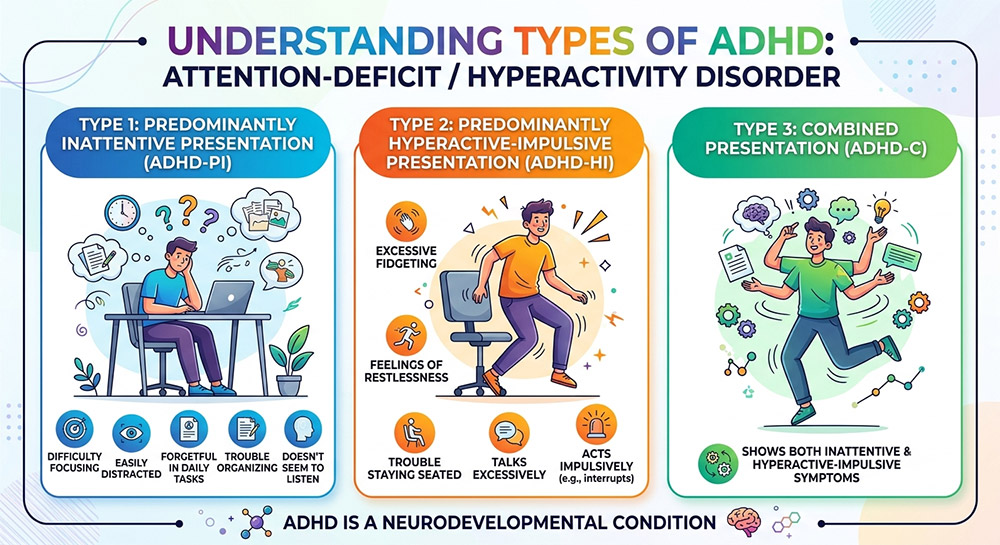
ADHD may affect attention, organisation, activity levels and impulse control in different combinations.
Predominantly Hyperactive-Impulsive ADHD
Predominantly hyperactive-impulsive ADHD may involve physical or internal restlessness, difficulty waiting, interrupting or acting before there has been time to consider the consequences. Children may move frequently or find quiet activities difficult, while adults may experience impatience, internal agitation or a constant need to remain occupied.
Impulsivity may also affect conversations, decisions and emotional responses, particularly during frustration or overwhelm. Someone may speak before fully considering their words, move quickly from one activity to another or find it difficult to pause before responding in situations that require patience.
Combined Type ADHD
Combined type ADHD involves a significant pattern of both inattentive and hyperactive-impulsive symptoms, including difficulties with executive function such as planning, memory and task completion, alongside restlessness, impatience or impulsive behaviour across different areas of daily life.
The balance between these difficulties will still differ from person to person and may shift as circumstances change. Combined ADHD does not mean that every possible trait is present or equally noticeable, nor does the presentation alone determine how much support someone may need.
Can Your ADHD Type Change Over Time?
ADHD presentation can change as a person develops and the demands placed on them evolve. Physical hyperactivity that was highly visible during childhood may become less obvious later, while internal restlessness, disorganisation or difficulty managing responsibilities may become more prominent.
Changes in school, employment, family life and independence can also expose difficulties that were previously easier to manage. A change in presentation does not necessarily mean an earlier assessment was incorrect; it may reflect how the person’s current symptoms and circumstances have developed.

ADHD presentations may change as responsibilities, environments and daily demands evolve.
How ADHD Types May Look Different in Adults and Children
ADHD in childhood may become visible through classroom concentration, following instructions, emotional regulation, friendships or routines at home. Children with more obvious hyperactive or impulsive behaviour may attract attention earlier, while predominantly inattentive difficulties can be mistaken for daydreaming, inconsistency or a lack of effort.
Adult ADHD may appear through missed deadlines, unfinished tasks, poor time management, financial disorganisation or repeated periods of overwhelm. Some adults develop coping strategies that make their difficulties less visible, while others only begin to recognise a pattern when work, relationships or family responsibilities become harder to manage.
Why an ADHD Type Cannot Be Identified from One Trait
Distraction, forgetfulness, restlessness and impulsive decisions can occur for several reasons. Anxiety, depression, sleep difficulties, Autism, stress and other concerns may also affect concentration or emotional regulation, so one familiar behaviour cannot establish that ADHD is present.
A structured assessment considers the overall pattern, when it began, where it appears and how it affects everyday functioning. At Mindful Space, we use this broader clinical picture to explore whether someone meets the criteria for ADHD and which presentation most closely reflects their current experience. The HSE National Clinical Programme for ADHD in Adults sets out how assessment is structured within Irish public mental health services, which is a useful context whichever route someone takes.
ADHD Is More Than a Presentation
The three ADHD presentations can make different patterns easier to recognise, but they do not define the whole person. Strengths, challenges and support needs remain individual, even among people who share the same presentation.
A fuller understanding comes from looking at how attention, organisation, activity levels and impulse control affect real life. This provides a more useful foundation for personalised recommendations than relying on the presentation alone.
Book an Online ADHD Assessment in Ireland
If you recognise ongoing difficulties with attention, organisation, restlessness or impulsivity in yourself or your child, an assessment can help clarify whether ADHD may be involved. Mindful Space provides online ADHD assessment and treatment for adults and children across Ireland, with personalised recommendations based on each person’s circumstances and support needs.
Frequently Asked Questions About the Types of ADHD
Is ADD the same as inattentive ADHD?
ADD is an older term that is still sometimes used when someone experiences attention difficulties without prominent hyperactivity. These patterns are now considered predominantly inattentive ADHD rather than being diagnosed as a separate condition.
Can someone have inattentive and hyperactive ADHD at the same time?
Someone who has a significant pattern of both inattentive and hyperactive-impulsive symptoms may meet the criteria for combined type ADHD. An assessment will consider the number, persistence and effect of those symptoms rather than relying on the presence of one or two traits.
Is one type of ADHD more severe than another?
No presentation is automatically more or less severe than another. The level of difficulty depends on the person’s symptoms, environment, responsibilities, co-existing concerns and access to appropriate support.
Can siblings have different ADHD presentations?
ADHD can affect siblings differently, even when both have the condition. One sibling may experience mainly inattentive difficulties, while another has a combined or predominantly hyperactive-impulsive presentation.
Does your ADHD type affect the support you may need?
An ADHD presentation can help identify areas where support may be useful, but it does not determine one standard approach. Recommendations should reflect how the individual’s particular difficulties affect home life, education, employment or relationships.
Can a teacher or employer identify someone’s ADHD type?
Teachers and employers may notice patterns that provide helpful information during an assessment. They cannot confirm an ADHD diagnosis or presentation, as this requires a clinical evaluation of the person’s history, symptoms and functional impact.
Does combined type ADHD always cause greater difficulties?
Combined type ADHD can affect several areas of functioning, but it is not automatically more significant than the other presentations. Predominantly inattentive or hyperactive-impulsive ADHD may also have a considerable effect on education, employment, relationships and everyday responsibilities.
Can stress make one ADHD presentation appear stronger?
Stress and increasing demands can make attention, organisation or impulse-control difficulties more noticeable. A clinician will still consider the wider history to distinguish persistent ADHD patterns from temporary changes linked to current circumstances.
Can someone have ADHD without being hyperactive?
Predominantly inattentive ADHD does not require prominent hyperactive-impulsive symptoms. It can still significantly affect learning, work, relationships and everyday organisation, even when the person appears calm or quiet.